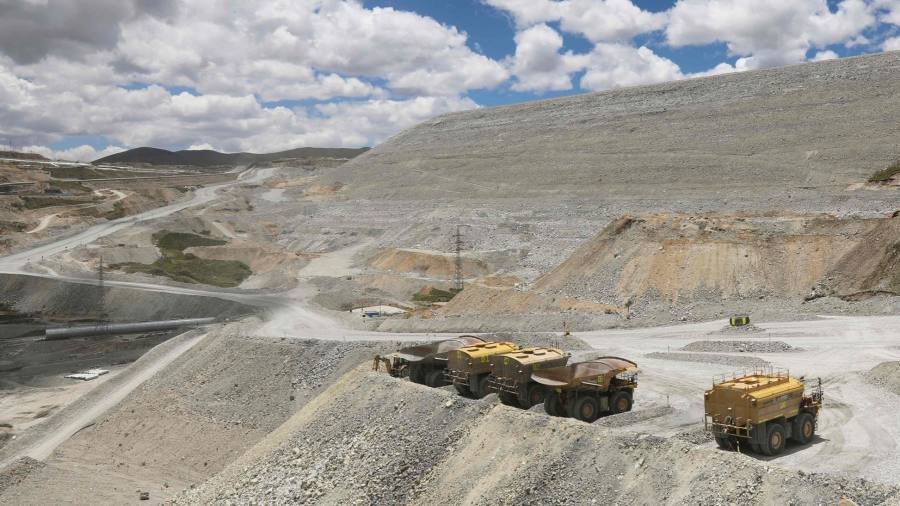
Unrest in Peru is threatening copper supply from the world’s second-largest producer. That has contributed to a rally of more than 20 per cent in the metal’s price since late-September lows. Events in Peru highlight the risks to global copper supply, strengthening the long-term bull case for the metal.
Although reports indicate mines in Peru are currently running, risks of shutdowns have not passed. The National Society of Mining, Petroleum and Energy thinks perhaps 30% of the country’s copper supply — approximately 2.4mn tonnes a year, or about 11 per cent of the world’s mined total — is at risk.
Labour disputes in Peru provide a useful reminder that a lot of copper comes from very few places. Almost half of world supply comes from Chile, Peru and China. Indeed, Chile’s production fell in 2022, owing to water and labour shortages, amid a tax kerfuffle with the government.
This matters when considering medium-term demand projections for copper, a metal seen as crucial to delivering the energy transition. It is a key input in all new electricity grids and essential to electric vehicles and heat pumps. The International Energy Agency estimates that global copper demand will increase by almost 40 per cent to 33mn tonnes a year by 2040.
London is the financial centre of choice for many a copper-focused miner. Of the diversified miners, BHP produces the most copper in this group. Anglo American should generate between a quarter and a fifth of its ebitda from copper, say brokers Liberum, but may suffer from its exposure to Peru. Glencore also has Peruvian copper production at Antapaccay that has restarted operations after a temporary suspension.
Pricey Antofagasta — at an enterprise value of 8 times forward ebitda — offers purer exposure, in Chile not Peru. Its focus on the red metal explains why its share price, up 44 per cent over six months, has left those of diversified London miners well back.
Mining stocks with copper exposure have done well in the past six months. Further threats to Peruvian supply can only support their share prices.
Source: Financial Times