
New research indicates that creatine, a widely used muscle-building supplement, may help alleviate symptoms associated with depression.
A systematic review, published in Genomic Press’s Brain Medicine, found that creatine monohydrate could be beneficial as an adjunctive treatment for major depressive disorder, although the evidence is currently considered preliminary.
Researchers based in Canada analysed data from five randomised controlled trials, which assessed the impact of creatine monohydrate consumption on mental health.
Four of these trials focused on major depressive disorder, while the fifth investigated bipolar disorder with a co-occurring depressive episode.
One trial, involving women with depression who took 5 grams of creatine daily alongside the antidepressant escitalopram, showed greater improvement after eight weeks. Another study found a benefit when creatine was incorporated into cognitive behavioural therapy.
One study saw benefit when creatine was added to cognitive behavioral therapy. (iStock)
Conversely, other studies involving adolescent girls showed no benefit from various creatine dosages after an eight-week period. The trial on bipolar depression also reported no significant improvements when 6 grams of creatine were added to medication over six weeks.
In a press release, the researchers noted that previous studies have indicated that individuals with mood disorders process creatine differently within the brain. As creatine plays a role in energy production, some scientists theorise that disruptions in this process may contribute to depression.
While creatine has also been linked to increased levels of dopamine and serotonin, neurotransmitters commonly targeted by antidepressants, the authors emphasised that the connection between brain creatine and mood “remains correlational,” given the “many moving parts” involved in depression.
Bassam Jeryous Fares, the lead study author and a student in the Faculty of Medicine at the University of Ottawa, stated that the signal is “interesting, but not a verdict.”
He added: “Two trials pointed one way and three pointed another. That is not the kind of evidence on which you change clinical practice. It is the kind that tells you the question is worth further exploration.”

Although creatine has also been associated with boosting dopamine and serotonin, which most antidepressants target, the authors stressed that the link between brain creatine and mood “remains correlational.” (iStock)
Nicholas Fabiano, the corresponding author and a psychiatry resident at the University of Ottawa, commented in the same press release that creatine “appears to be a safe intervention,” noting that observed side effects were limited to mild stomach discomfort.
He cautioned: “We cannot yet reliably say that creatine helps with depressive symptoms or if the findings are generalizable to everyone.”
Dr Thea Gallagher, a psychologist and director of wellness programmes at NYU Langone, who was not involved in the study, informed Fox News Digital that while creatine is primarily known for its role in supporting muscle performance, it also assists the brain in energy production and utilisation.
“Researchers believe that some people with depression may have alterations in brain energy metabolism, and creatine could help support these energy-producing pathways,” Gallagher explained. “There is also emerging evidence that it may influence neurotransmitters and reduce oxidative stress and inflammation, although these mechanisms are still being investigated.”

Creatine should be considered a “promising addition” to depression treatments, a doctor said. (iStock)
Gallagher underscored that the research suggests creatine may be most effective when used in conjunction with established depression treatments, rather than as a standalone replacement.
She stated: “This research is encouraging because it adds to a growing body of evidence suggesting that supporting brain energy metabolism may be another pathway for improving depression symptoms. It’s exciting whenever we identify another potential tool that could complement existing treatments, particularly one that is relatively inexpensive and widely available.”
Limitations and caveats
The researchers acknowledged that a limitation of the new study is its nature as a review of existing research, rather than a new clinical trial, and added that “larger, well-controlled trials are still needed.”
Gallagher advised that creatine should be viewed as a potentially promising addition to treatment, not a substitute for psychotherapy, antidepressant medication, regular exercise, or healthy sleep patterns.
She cautioned: “While creatine has a strong safety profile for most healthy adults, it’s still important to talk with your healthcare provider before starting any supplement — particularly if you have kidney disease, are pregnant or have other medical conditions.”
For individuals experiencing symptoms of depression, Gallagher recommended seeking evidence-based mental healthcare.
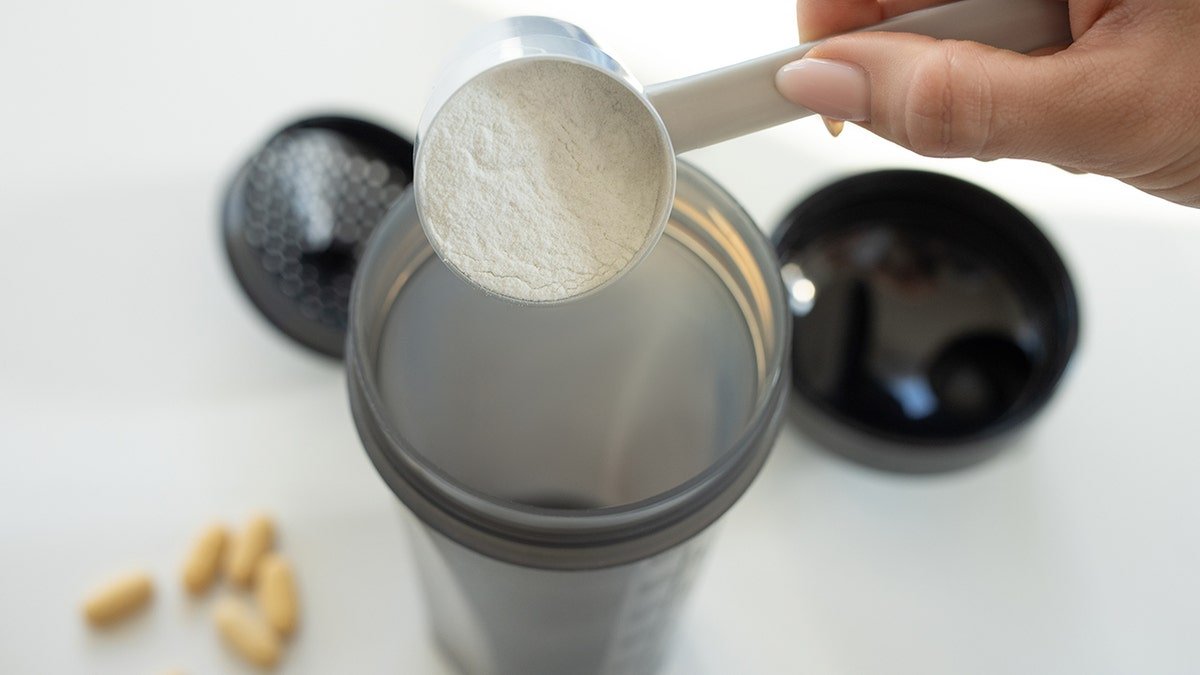
“While creatine has a strong safety profile for most healthy adults, it’s still important to talk with your healthcare provider before starting any supplement – particularly if you have kidney disease, are pregnant or have other medical conditions,” a doctor