

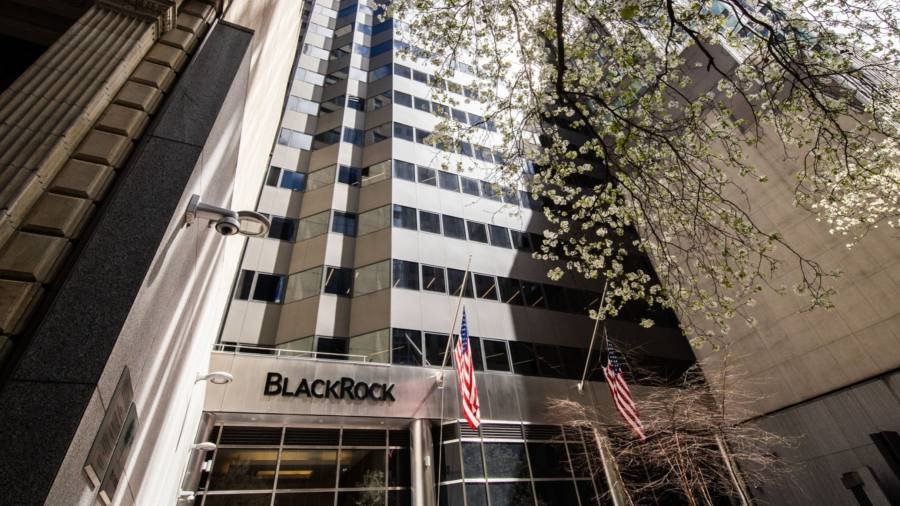
BlackRock reported a drop in assets under management and profits and announced it would cut spending and pause discretionary hiring as the world’s largest money manager was buffeted by falling markets.
In its quarterly results on Thursday, BlackRock said AUM fell to $8tn, down from $8.5tn in June and below analysts’ expectations of $8.3tn. Much of this was because of falling markets, which hit its giant index funds hard.
Revenue fell 15 per cent year on year to $4.3bn, partly because of the rising dollar. The group, which has seen total AUM decline from a peak of $10tn last year, has suffered a substantial drop in performance fees this year as clients and funds have experienced losses.
BlackRock shares were flat in morning trading in New York on Thursday, leaving them down almost 43 per cent this year.
But BlackRock still reported $65bn in long-term net inflows to its investment products, despite high-profile political criticism from both left and right over its environmental, social and governance investment policies.
Much of this came from institutional clients, which compensated for outflows from retail customers. Short-term cash management products had substantial outflows as clients took advantage of rising interest rates.
BlackRock is also winning institutional mandates to serve as what it called an “outsourced chief investment officer”, while revenue from proprietary technology, notably its Aladdin investment management platform, was up 6 per cent year on year.
Net income was down 16 per cent at $1.4bn, but adjusted earnings per share of $9.55 were boosted by buybacks that reduced the share count and substantially beat analyst expectations of $7.07, as polled by Bloomberg. The group also benefited from a lower than expected tax rate and a higher valuation of its stake in wealth management platform iCapital.
“Declining profit margins are not great, but we expect further deterioration at peers,” said Kyle Sanders, analyst at Edward Jones. “What does make them stand out in a positive light is that they are still gathering assets.”
BlackRock has been hit by complaints and withdrawals from Republicans for its efforts to pressure companies to consider the long-term impact of climate change. Elected Democrats, meanwhile, complain that the money manager is not doing enough to persuade companies to cut emissions.
Chief executive Larry Fink said on the earnings call that the company was “engaging more with our stakeholders than ever before. We’re telling our story so that people can make decisions based on facts, not on misinformation, not on politicisation by others.”
He noted that the group had net inflows of $84bn specifically in the US and highlighted BlackRock’s Voting Choice programme, which allows institutional shareholders to vote their own shares on climate and other issues. “Our message has been about choice . . . I think that is resonating in our flows this quarter.”
Fink suggested that the turmoil in the UK gilt market linked to liability-driven investing products offered by asset managers including BlackRock could be easing. Most pension fund clients had been able to post the necessary collateral ahead of the Bank of England’s plan to stop buying gilts on Friday, he said. “The market may be . . . a little more normalised” although he warned that some individual pension funds may still struggle.
He added that BlackRock wanted to work with regulators to prevent a repeat and would be open to a “whole redesigning”.
Source: Financial Times