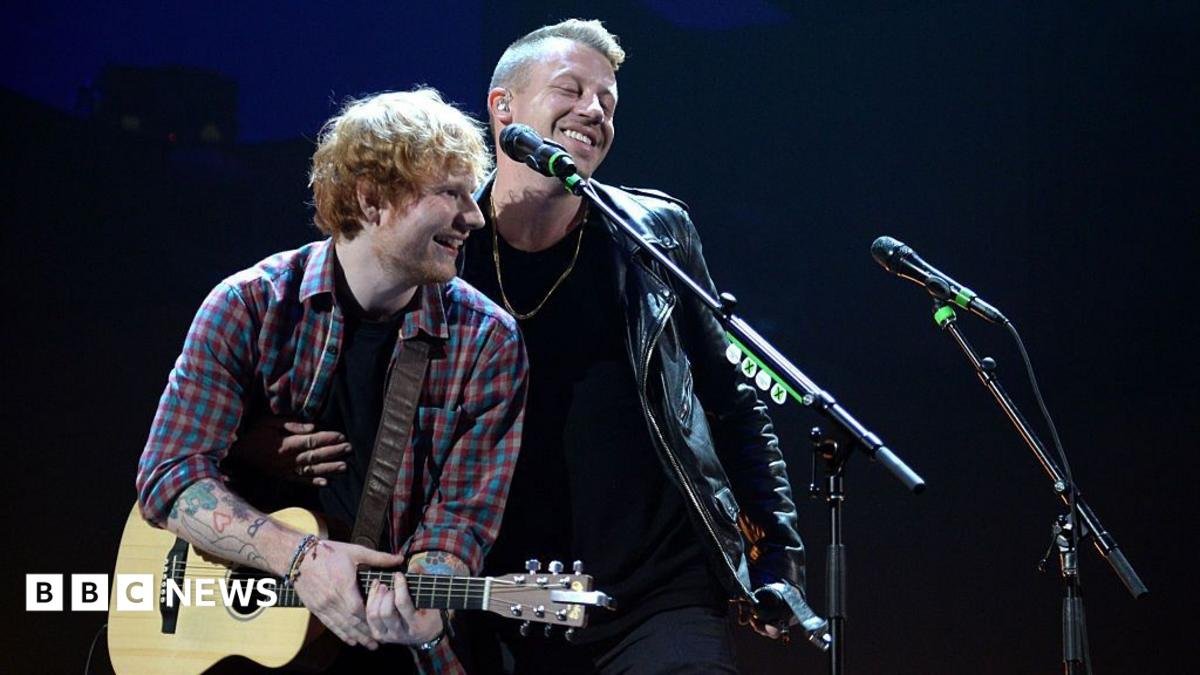
A high-profile US tour for Ed Sheeran dramatically lost its opening act, Macklemore, after the rapper’s outspoken pro-Palestinian comments sparked a billionaire’s intervention. The sudden removal on 14 September followed a storm of controversy.
Macklemore used his early September slot in New Jersey to declare, “Free Palestine,” a phrase he stated was “very, very dear to my heart.” He then performed a song criticising Israel’s military actions in Gaza, following the 7 October 2023 Hamas-led attack on Israel, according to reports.
The following night, the “Thrift Shop” rapper escalated, referring to the death toll as a genocide, a claim Israel rejects. This immediately drew fire, with the Israeli American Council launching a petition for his removal. Campaign group StopAntisemitism also accused him of “ambushing fans with propaganda.”
Pop star Pink, who is Jewish, added to the pressure, reposting an anti-Macklemore meme and sharing her own message criticising his remarks. Macklemore later revealed on Instagram that the media attention had prompted billionaire stadium owner Robert Kraft to call Ed Sheeran directly.
Kraft, who also owns the New England Patriots American football team, allegedly told Sheeran that Macklemore “would not be allowed to perform in his stadium.” Concert promoter Messina Touring Group later confirmed Macklemore was dropped. They cited threats from venues, including Kraft’s Gillette Stadium, to cancel Sheeran’s entire concerts.
The Jewish billionaire confirmed he banned the US rapper from Gillette, accusing him of “hate speech and antisemitic rhetoric.” Kraft stated: “I agree with Macklemore, too many lives have been lost and there has been too much suffering. But only sharing selective information and ignoring the actions of Hamas is not honest and only advances more divisiveness and hate.”
Macklemore’s removal on 14 September highlights the significant commercial power held by venue owners and promoters in shaping public platforms. This incident underscores how deeply geopolitical tensions can ripple through the entertainment industry, often with immediate financial consequences for artists.