

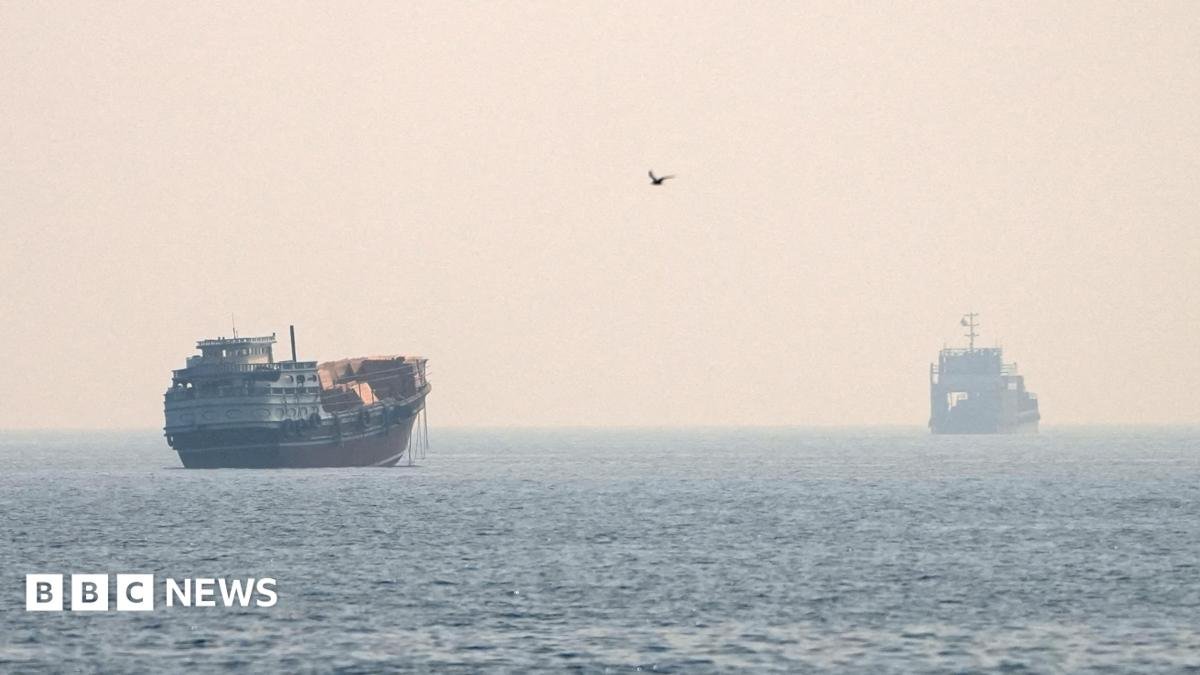
Iran’s grip on the Strait of Hormuz just got tighter, with the US launching fresh strikes after Tehran closed the waterway.
The Islamic Revolutionary Guard Corps (IRGC) says it attacked a Cyprus-flagged vessel that turned off its systems and diverted from the approved route, according to state media.
US Central Command (Centcom) hit back with its “third round of strikes this week”, saying IRGC forces “blatantly attacked” the vessel, causing significant damage to the engine room and leaving one civilian crew member missing.
The UK’s Maritime Trade Operations (UKMTO) reported the crew were forced to abandon ship and were in a lifeboat. This is not just a game of tit-for-tat – the Hormuz Strait is the world’s oil jugular, with a fifth of global supplies passing through it.
Iran was “provided yet another opportunity to demonstrate adherence to the Memorandum of Understanding” but has “again failed”, Centcom said in a statement. US Secretary of Defense Pete Hegseth tweeted: “Iran made a poor choice. Now they pay.”
The IRGC warned that any US “aggression” would be met with “severity” and new bases in the region would be targeted. This is a high-stakes gamble – if Iran’s Hormuz chokehold tightens, global oil markets will feel the squeeze.
Centcom’s strikes may be a show of force, but they also mask a deeper concern – the US is running out of options to keep the Strait open. As the world’s oil supply lines are stretched to the limit, the US-Iran brinkmanship is a power-check that could tip global markets into chaos.
The clock is ticking – with each new escalation, the risk of a miscalculation grows. The question is, what happens next – will Iran’s grip on the Hormuz Strait tighten further, or will the US find a way to loosen it?
One thing is certain – the world is watching, and the stakes are higher than ever. The US and Iran are locked in a high-stakes game of chicken, with the global economy hanging in the balance.
As the situation continues to unfold, one thing is clear – the Hormuz Strait is not just a waterway, it’s a geopolitical pressure point that could unleash a global economic shockwave.