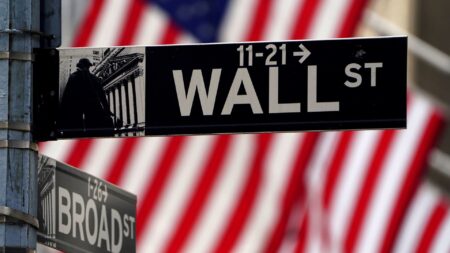



Traders work on the floor of the New York Stock Exchange (NYSE) in New York City, November 10, 2022.
Brendan McDermid | Reuters
U.S. stock futures jumped Friday when the December jobs report showed that employment was only slightly stronger and wage gains were less than expected, showing some signs of progress amid the Federal Reserve’s interest rate hikes to tame inflation.
Dow Jones Industrial Average futures rose 370 points, or 1.12%. S&P 500 futures gained 1.10%, while Nasdaq-100 futures jumped 1.13%.
The December nonfarm payrolls report showed that the U.S. economy added 223,000 jobs last month, slightly higher than the expected 200,000 jobs economists polled by the Dow Jones expected. In addition, wages grew slower than anticipated, increasing 0.3% on the month where economists expected 0.4%.
“I don’t think it really changes the Fed’s view of the world that much,” said Michael Schumacher, head of macro strategy at Wells Fargo. “It’s positive for the Fed because it doesn’t seem like earnings are going up parabolically anymore. But I don’t think it changes the discussion at the upcoming meeting.
The Dow on Thursday fell more than 300 points Thursday after the release of a stronger-than-expected ADP private payrolls report. This raised concern for higher Federal Reserve rates, which in turn stoked fears that the U.S. could fall in to a recession soon.
“I’m allowing in my thinking that we could have a recession by the end of the year, and that recession will be brought about by Fed tightening, QT, quantitative tightening, a stronger dollar, or the price of oil,” said Omega Family Office’s Leon Cooperman on CNBC’s “Closing Bell: Overtime” on Thursday.
“And if we have a recession, the market will have ended its decline, say, down 35% from its peak, so that gives you the low 3,000s,” Cooperman added.
Stocks are headed for losses in the first trading week of 2023. As of Thursday’s close, the Dow is down 0.66% week to date, headed for its fourth down week in five. Meanwhile, the S&P 500 and the Nasdaq are both on pace for their fifth straight week of losses, down 0.82% and 1.54%, respectively.
Source: CNBC