


Global shares extended losses into a seventh session on Thursday ahead of a widely anticipated US inflation report that investors will scan for clues about how much further the Federal Reserve will raise interest rates.
A FTSE gauge of worldwide stocks slipped 0.2 per cent in early London dealings while Europe’s regional Stoxx 600 fell 0.3 per cent and Hong Kong’s Hang Seng index shed 1.6 per cent. Futures contracts tracking Wall Street’s S&P 500 added 0.1 per cent.
The muted moves came ahead of the publication of the closely watched US consumer price index reading for September. Economists polled by Reuters have forecast a rise of 8.1 per cent, which would be a slight easing in the annual rate of inflation from 8.3 per cent in August.
Market participants have scrutinised reports on price growth and the state of employment in the world’s largest economy for signs of how far and fast the Fed and its international peers will tighten monetary policy. Fears have intensified this year that rate-setters will turn the screws into a protracted slowdown.
The Fed has already raised borrowing costs by 0.75 percentage points at its past three meetings, taking its benchmark interest rate to a range of 3 to 3.25 per cent. Markets are pricing in expectations of a fourth consecutive increase of similar magnitude.
Minutes from the Fed’s September monetary policy meeting, released late on Wednesday, showed that the central bank was concerned about doing “too little” to stamp out soaring inflation.
A producer price index report released earlier in the session did little to allay concerns about persistent inflationary pressures, delivering a reading of 8.5 per cent for the year to September, down from 8.7 per cent in August but above expectations of 8.4 per cent.
Equity and bond markets have come under acute pressure this year, pummelled by rising interest rates and the prospect of monetary policy screws being twisted even further.
Higher borrowing costs have damaged the appeal of more speculative stocks that were winners earlier in the coronavirus pandemic, biting into their projected cash flows, which are typically modelled into the future. The tech-heavy Nasdaq Composite share index has tumbled by a third this year.
Yields ticked higher on US government bonds on Thursday as prices edged lower across all maturities. The yield on the benchmark 10-year US Treasury note added 0.03 percentage points to 3.93 per cent.
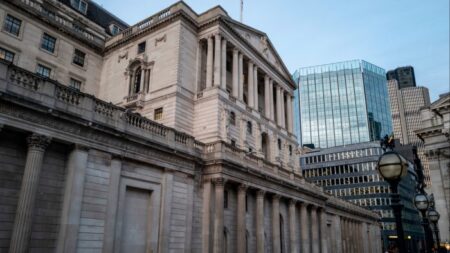
Gilt markets were steadier in early dealings, following big swings in the previous session. The 10-year UK yield was flat at 4.43 per cent, while the 30-year yield, which was the main focus of the Bank of England’s intervention to stabilise gilt dealings in late September, slipped 0.07 percentage points to 4.83 per cent.
UK bonds have convulsed in recent weeks following the unveiling of Westminster’s “mini” Budget on September 23, which laid out extensive tax cuts to be paid for in large part through borrowing. The historic moves in gilt yields, in turn, sparked a crisis for pension funds that rely on liability-driven investment strategies, pushing them into a vicious cycle of forced asset sales.
Source: Financial Times