

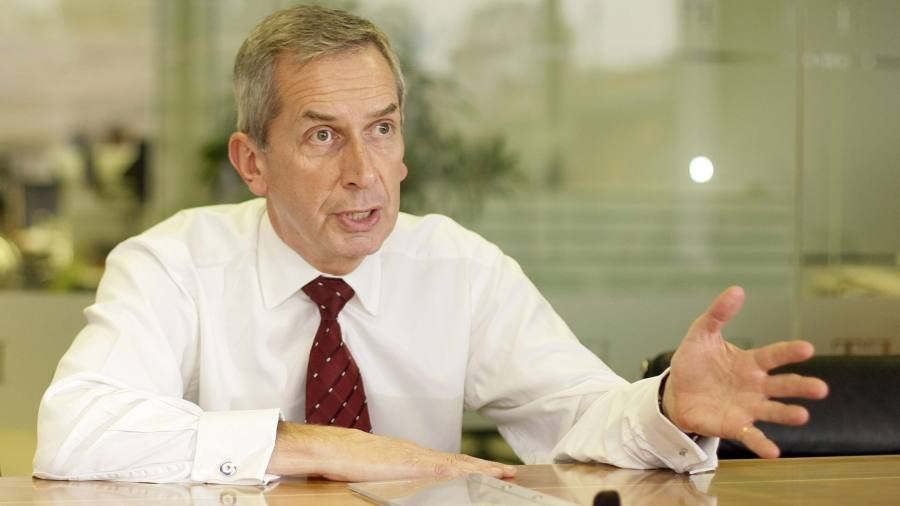
UK fund manager Terry Smith was paid more than £36mn last year as his investment boutique Fundsmith posted a bumper profit.
The fund company, which Smith established in 2010, reported record annual profit after tax of £58.2mn in the 12 months to the end of March 2022, beating the previous year’s record of £57.7mn.
According to the company’s accounts, Smith was handed £36.4mn of the company’s profits as the highest paid employee. That far outstripped the pay of other UK fund group bosses. Peter Harrison, chief executive of Schroders, was paid £8.48mn last year, for example, while Sir Nigel Wilson, chief executive of Legal & General, received £4.5mn.
The record profit and Smith’s payout were disclosed just as the performance of his flagship Fundsmith Equity Fund has started to suffer.
Returns from the fund over the whole of 2022 fell 14 per cent, compared with a positive return of 22 per cent in 2021 and 18 per cent in 2020.
Smith’s style of investing in growth stocks came under pressure in the latter part of 2022 from rising interest rates and the rout suffered by shares in technology companies.
The top holdings in the equity fund include Microsoft, medical technology company Stryker, and luxury consumer businesses such as L’Oréal, Estée Lauder, and LVMH.
The fund was also hit last year by holdings in US payments group PayPal and Facebook owner Meta.
Smith, who is based in Mauritius, focuses on investing in a small number of businesses that he deems “high quality, resilient, global growth companies that are good value” and that he holds for the long term.
He is considered one of the UK’s top stockpickers and the £22.5bn Fundsmith Equity Fund is popular among retail investors.
Luke Hildyard, director of the High Pay Centre, said Smith’s 2022 pay “highlights how non-listed companies that are not subject to the same transparency requirements over their top pay are able to make extraordinary payouts without the same level of scrutiny or accountability.
“Very large payouts like this [indicate] that both the managers and their investee companies have capacity to pay their staff more and make a bigger tax contribution,” Hildyard added.
Somerset Capital, a fund boutique focused on emerging markets, has also reported annual results. The fund company, in which Tory MP Jacob Rees-Mogg has a stake, said profits dropped by a third in the year to March 2022, to £6.5mn. This profit is divided among the company’s members, including Rees-Mogg.
Fundsmith’s 2022 accounts also showed Smith’s Mauritius-based business, called Fundsmith Investment Services, charged the UK company £252mn in fees. FIS provides investment management trading services to all Fundsmith funds, although there are no accounts for FIS, so Smith’s fees from this business are not disclosed.
Smith argued at the time that the fund did not aim for “short-term gains.” The fund has returned 478 per cent since it was launched in 2010.
Smith, who was previously chief executive of stockbroker Tullett Prebon, attracted attention last year for his views on consumer business Unilever.
Unilever last year made bids for pharmaceutical company GSK’s consumer health division, which were rejected. Smith called this a “near-death experience” and called on management to focus on improving the business rather than pursuing large-scale acquisitions.
Smith also announced last year the closure of his £320mn Emerging Equities Trust as a result of its performance. The trust’s share price had lagged behind the MSCI Emerging and Frontier Markets index for nearly five years.
Smith is the ultimate controlling party of Fundsmith, owning more than 50 per cent of the company’s voting rights.
Fundsmith declined to comment.
Source: Financial Times