

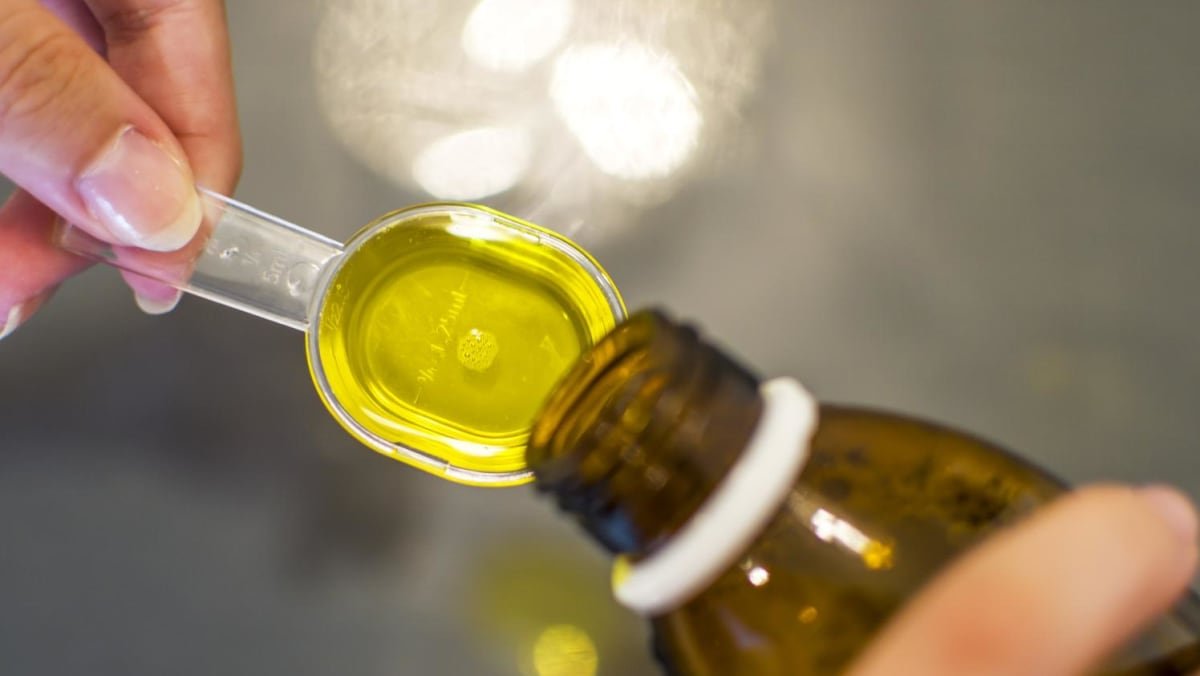
“There could be impurities in the solvent, among (the impurities) were ethylene glycol and diethylene glycol,” BPOM chief Penny Lukito told a press conference on Oct 24.
Mdm Lukito said there were “very very high” concentrations of either substance in the five syrup medication products recalled by their respective manufacturers. The BPOM chief noted that the contaminants were only found in certain production batches.
BPOM has not been able to determine how the toxic chemicals ended up in the medicines.
Mdm Lukito said the agency is considering whether to take criminal action against the pharmaceutical companies responsible for manufacturing the five products.
Mr Windhu Purnomo, a public health expert at Airlangga University criticised the drug and food agency, saying that they should not have allowed such cases of contamination to occur in the first place.
“The BPOM (officials) must tighten their monitoring procedures. Such contamination can come from anywhere. Not only must they ensure that safety requirements are met during the production stage but also during shipment and storage before they are purchased and consumed by the general public,” he told CNA.
Mdm Lukito revealed that her agency does not regularly test medicines for contaminants after they leave the factory floor. She added that such tests are conducted only in special circumstances such as the recent spike in AKI cases.
“In the future, we will improve and strengthen our monitoring both pre-market and post-market,” she said during the Oct 24 press conference.
HELP IS ON THE WAY
With more than 50 per cent of AKI cases in Indonesia resulting in fatalities, Mr Hermawan Saputra, an adviser at the Indonesian Public Health Expert Association, is urging the government to declare a state of national emergency, just like it did when the COVID-19 pandemic hit the country.
“(Declaring a state of emergency) allows the government to allocate more manpower and resources to mitigate cases of AKI,” Mr Saputra told CNA.
“The government can also form a task force to see how widely these contaminated products were distributed and see whether there are any acute kidney injury cases there. Because so far, most of the cases reported were the ones treated at major hospitals, so they may well be the tip of the iceberg.”
The Health Ministry said AKI cases have been reported in 27 of the 34 provinces in Indonesia.
Indonesian Health Minister Budi Gunadi Sadikin argued that declaring a state of emergency is not yet necessary.
The minister said on Monday that last week’s ban on all syrup medications and the subsequent investigation to determine which might be tainted with the two chemicals had been effective in slowing down the number of AKI cases. Without such measures, he said there might be more than 70 cases a month.
Mr Sadikin said some patients appeared to be responding well to fomepizole, a medication used to treat ethylene glycol and diethylene glycol poisoning.
Since the medication is not readily available in Indonesia, the government had to import 20 fomepizole vials from neighbouring Singapore and 16 more from Australia.
Indonesia is also looking to procure 200 more from the United States and Japan.
“We will foot all expenses for this new medication. We will distribute them to all hospitals which are currently treating acute kidney injury patients,” the minister said.
Mother of two Mdm Dewi said the availability of a possible treatment for ethylene glycol and diethylene glycol poisoning has made her feel less uneasy.
“However, it doesn’t mean I will be buying syrup medications for my children anytime soon,” she said.
“The government still has to determine how (the chemicals) get there, punish those responsible and make sure that it will never happen again.”
Source: CNA