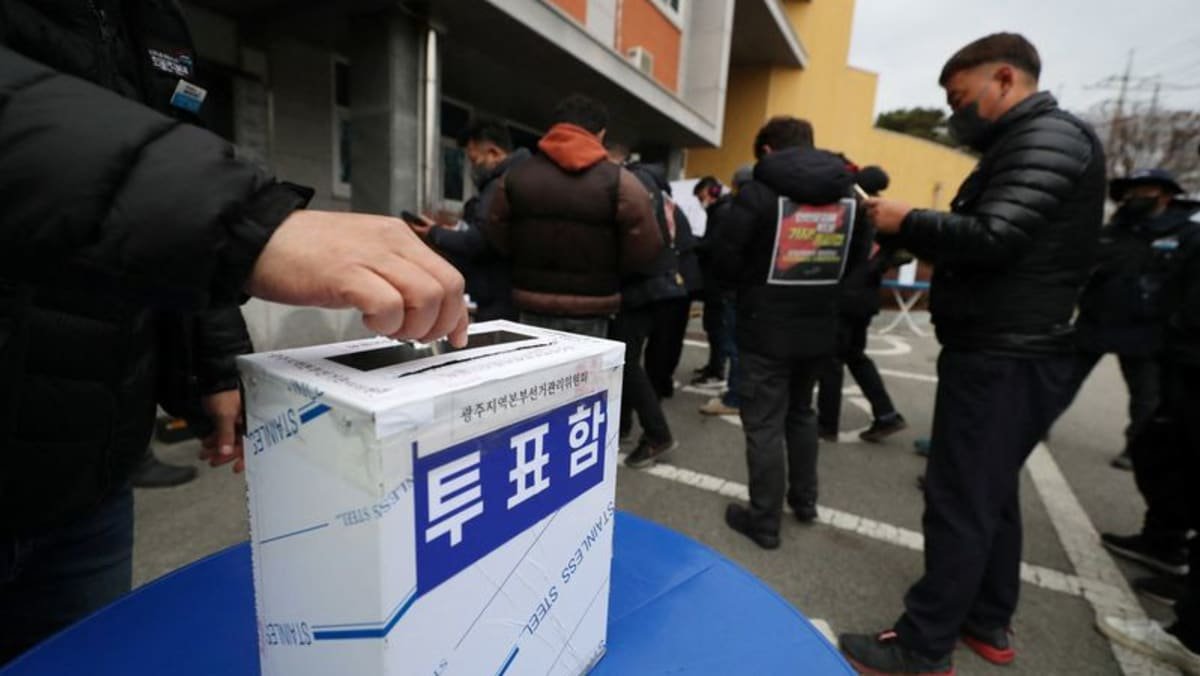
SEOUL: As their walkout entered its third week, South Korean truckers realised their bid to widen and make permanent a government scheme on minimum freight rates was failing as public support waned and President Yoon Suk-yeol refused to budge.
Many businesses prepared for the strike, which began Nov 24, and were ready to weather short-term pain. And as the government increased pressure – including unprecedented “start work” orders – some of the 25,000 striking truckers headed back to work this week, facing the prospect of not only lost income but lost jobs, drivers told Reuters.
On Friday (Dec 9), the Cargo Truckers Solidarity Union said that 62 per cent of union members voted to call off the strike to return to work but that the union would continue its minimum wage campaign.
“The game is over. It is so sad that all we could do is stop our cars, but nothing has changed,” said Kang Myung-gil, a container truck driver who came back to work on Monday after a two-week walkout.
“The union fell into a trap that the government buried,” said Kang, who is not a union driver, referring to the government narrative that the strike is devastating the country’s economy. “Then, we, living day by day, just have to accept the reality and move on.”
After the strike ended, Yoon’s press secretary, Kim Eun-hye, said the government would “unwaveringly abide by laws and principles” on labour issues, adding that the truckers’ action had caused “astronomical damage” to the economy.
This summer, an eight-day strike by truckers delayed cargo shipments from cars to cement across Asia’s fourth-largest economy before it ended with each side claiming it had won concessions.
But this time, the government rejected the union’s bid to expand minimum protections to other kinds of cargo, including oil tankers, package delivery trucks and auto carries, saying drivers are already well-paid. The government has said it would only extend the current wage programme for three more years.
The difference was that Yoon took a harder line than in the first strike, and South Korean industries were willing to suffer short-term losses to keep operations running.
Yoon ordered some drivers back to work, using never-before invoked powers under a 2004 law, compared strikers to North Korea’s nuclear threat and declined to engage with union representatives.
After a start-work order was issued on Nov 29, traffic at ports began recovering to normal levels, government data shows.
Source: CNA