

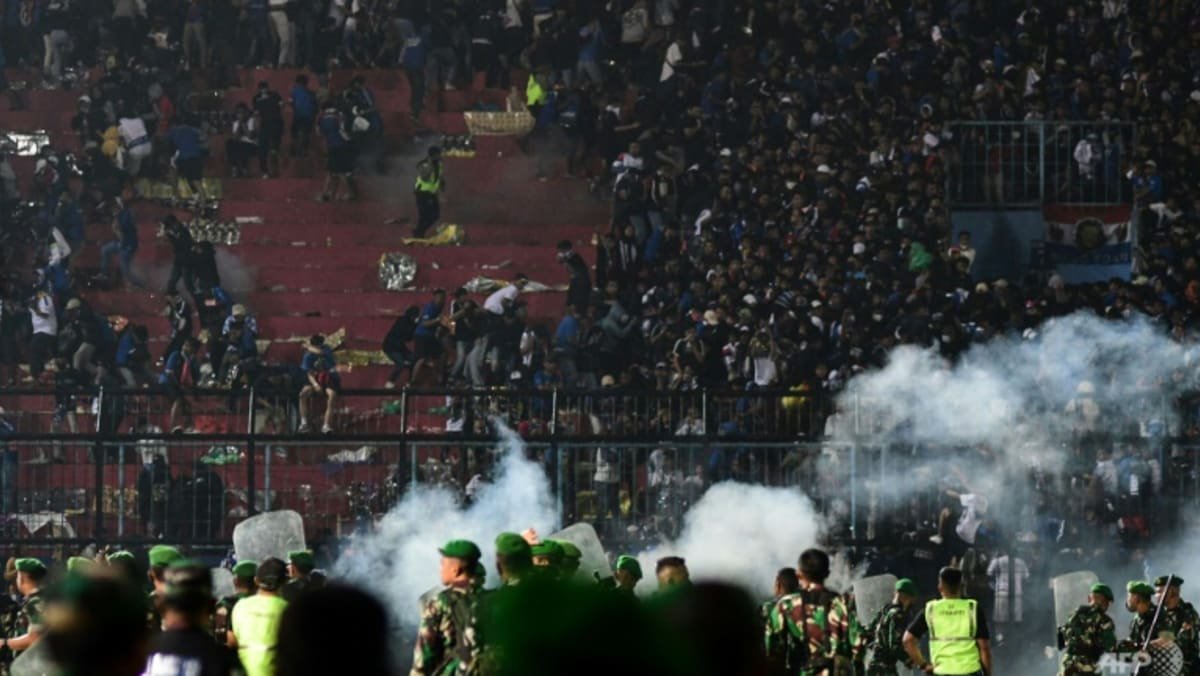
An enclosed stadium environment offers little escape for victims seeking to flee from the choking and burning effects of tear gas, said Prof Westerbeek from the International Sport Business department at Victoria University, adding that investigations should centre on the role of authorities instead of movements of the crowds.
“In a confined space, why do you decide to create that level of panic where you basically herd people into areas where there’s no way out?” he asked. “I think that will be pretty much the focus of the internal and localised investigation of the actions of police.”
FIFA, the world’s governing body for football, says in its regulations that police and stewards should not carry or use firearms or crowd control gas.
STADIUM WAS OVER CAPACITY
The usage of tear gas was reactive rather than preventive, said Prof Westerbeek.
“The police were combating the symptoms rather than going back to the cause of the problem which was (that) 4,000 tickets (were sold) in excess of stadium capacity,” he said.
The 38,000-capacity stadium in East Java was overfilled, with 42,000 tickets issued for the match, Indonesia’s chief security minister Mahfud MD said in social media posts, adding that organisers ignored a recommendation to print fewer tickets.
Source: CNA