

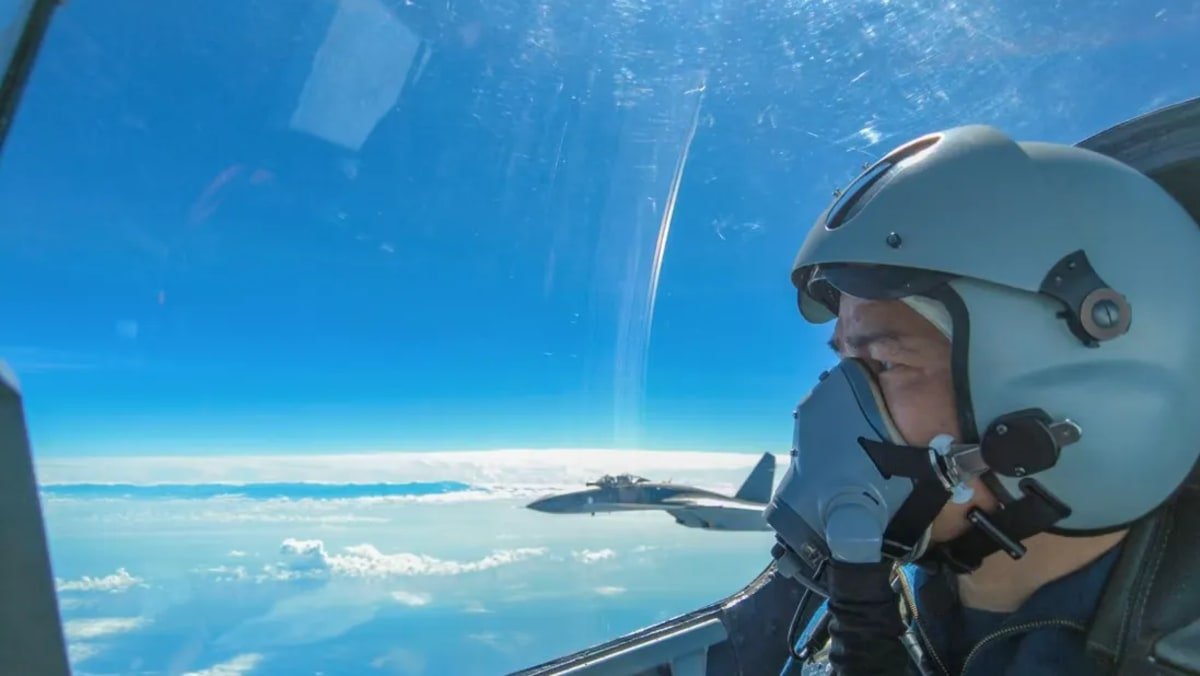
The US Central Intelligence Agency has argued that Beijing was aiming to develop the ability to take control of Taiwan by that year, though military officials believed nothing was set in stone and the timing of any attack on the island would heavily depend on the vigilance of US forces.
The CSIS report on Monday elaborated on findings from 24 iterations of a war game using historical data and operations research to model a Chinese amphibious invasion of Taiwan three years from now and to map the potential outcomes.
In most modelled scenarios, Washington, Taipei and Tokyo would secure victory in maintaining an autonomous Taiwan.
“There is one major assumption here: Taiwan must resist and not capitulate. If Taiwan surrenders before US forces can be brought to bear, the rest is futile,” the report said.
Especially in the most likely “base scenario”, Chinese forces were predicted to quickly founder and incur about 22,000 personnel losses at sea and on the ground, with nearly half (45 per cent) assumed killed, and a majority of the 30,000-plus Chinese survivors on Taiwan expected to become prisoners of war.
“Although the project did not explore what effects these losses might have on the Chinese political system, the (Communist Party of China) would be risking its hold on power,” the report said.
However, a defence of Taiwan mounted by the US and Japan would come at a high cost, according to the report. In a military conflict with Beijing, Washington was likely to experience arguably its severest losses since World War Two, it stated.
“The United States and Japan lose dozens of ships, hundreds of aircraft, and thousands of servicemembers,” the report said. “Such losses would damage the US global position for many years.”
“While Taiwan’s military is unbroken, it is severely degraded and left to defend a damaged economy on an island without electricity and basic services”, it added.
The report said US forces would lose about 3,200 troops in three weeks of combat – about half the country’s death toll from 20 years of combat in Iraq and Afghanistan – and an anticipated 140 losses per day would be more than four times the rate at the height of the Vietnam war.
The US would typically lose two aircraft carriers and 10 to 20 large surface combatants in most scenarios, the report added.
“We are not arguing against defending Taiwan any more than we are arguing for defending Taiwan, but that the potential costs of such a defence need to be part of the debate,” said Matthew Cancian, one of the authors and a senior researcher at the US Naval War College, at a report launch on Monday.
Source: CNA