

“HIGHER RISK”
Sunday is a normal business day for shops in Beijing and it is usually bustling, particularly in spots like the historic Shichahai neighbourhood packed with boutiques and cafes.
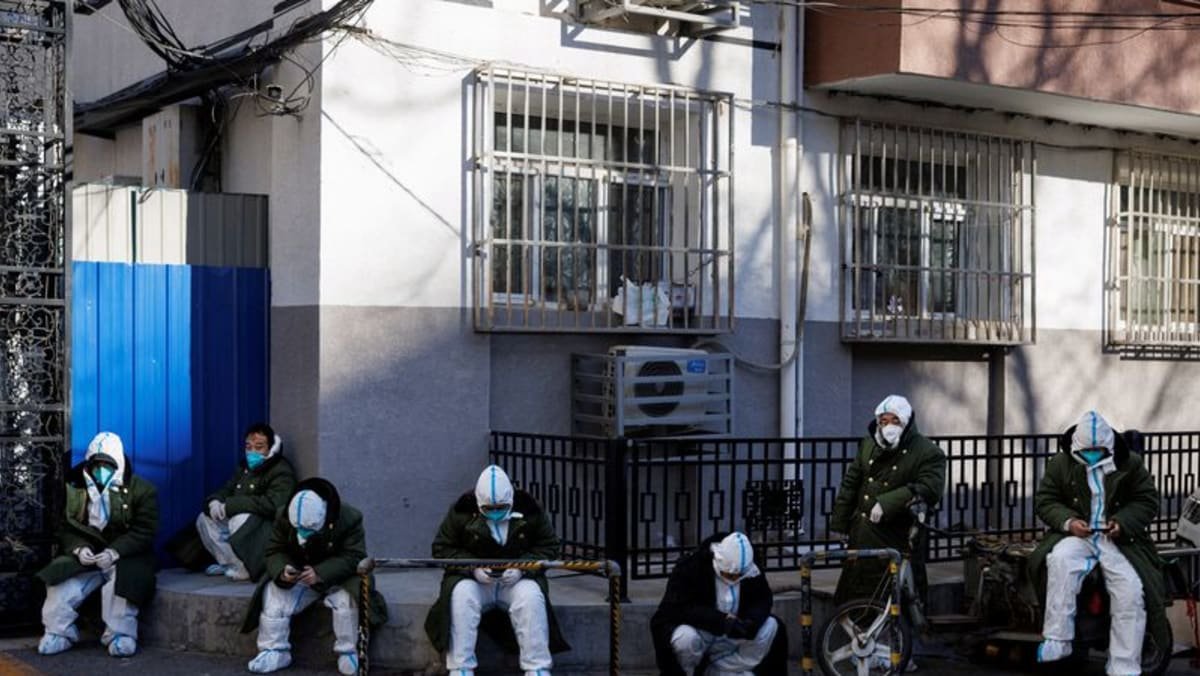
But few people were out and about on Sunday and malls in Chaoyang, Beijing’s most populous district, were practically deserted with many salons, restaurants and retailers shut.
Economists widely expect China’s road to economic health to be uneven as shocks such as labour crunches due to workers calling in sick delay a full-fledged recovery for some time yet.
“The transition out of zero-COVID will eventually allow consumer spending patterns to return to normal, but a higher risk of infection will keep in-person spending depressed for months after re-opening,” Mark Williams, chief Asia economist at Capital Economics, said in a note.
China’s economy may grow 1.6 per cent in the first quarter of 2023 from a year earlier, and 4.9 per cent in the second, according to Capital Economics.
Epidemiologist Zhong also said it would be some months before a return to normal.
“My opinion is in the first half of next year, after March,” he said.
While China has removed most of its domestic COVID-19 curbs, its international borders are still largely closed to foreigners, including tourists.
Inbound travellers are subjected to five days of quarantine at centralised government facilities and three additional days of self-monitoring at home.
But there are even hints that that rule could change.
Staff at the main international airport in Chengdu city, asked if quarantine rules were being eased, said that as of Saturday whether or not one needed to do the three days of home quarantine would depend on a person’s neighbourhood authorities.
Source: CNA