


“PERFECT STORM”
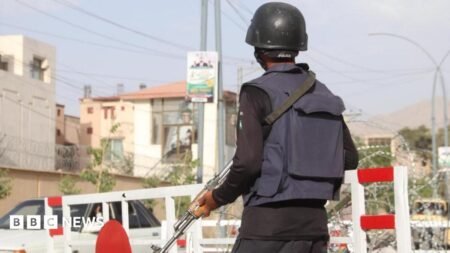
Peshawar, the provincial capital of Khyber Pakhtunkhwa, was like much of the region severely affected by a wave of horrific violence carried out by the Pakistani Taliban after they emerged in 2007.
Years of attacks on schools, civilians and places of worship, finally ended with a military clearance operation that began in 2014, pushing the insurgents into the mountainous border and Afghanistan.
Violence drastically declined until the withdrawal of US and Nato troops in Afghanistan in 2021 led to the return of the Taliban in Kabul, emboldening militant groups in the border region.
The Pakistani Taliban, known as the Tehreek-e-Taliban Pakistan (TTP), are back with a new strategy – targeting stretched security forces in low-level attacks.
The group have distanced itself from this week’s mosque blast but police are investigating whether an on-off TTP affiliate was the culprit.
“Earlier I used to feel safe near the police, now when a police car or officers pass near me, I fear in my heart that they might be attacked and I will also be hurt,” 55-year-old Muhammad Haneef Awan told AFP.
Meanwhile, the country is almost paralysed by a dual economic and political crisis that has caused the cost of living to soar ahead of the general elections due in October.
Politicians from the ruling coalition parties and former prime minister Imran Khan’s opposition group – which earlier this month pulled out of ruling Khyber Pakhtunkhwa province to pile pressure on the government – have blamed each other for the worsening security situation.
“This ‘perfect storm’ presents an ideal opportunity for the TTP and others of their ilk to strike at the state,” read an editorial in the leading English newspaper Dawn on Wednesday.
Defence Minister Khawaja Asif said the government’s National Security Committee will meet soon to discuss another military operation against the insurgent groups.
Source: CNA