

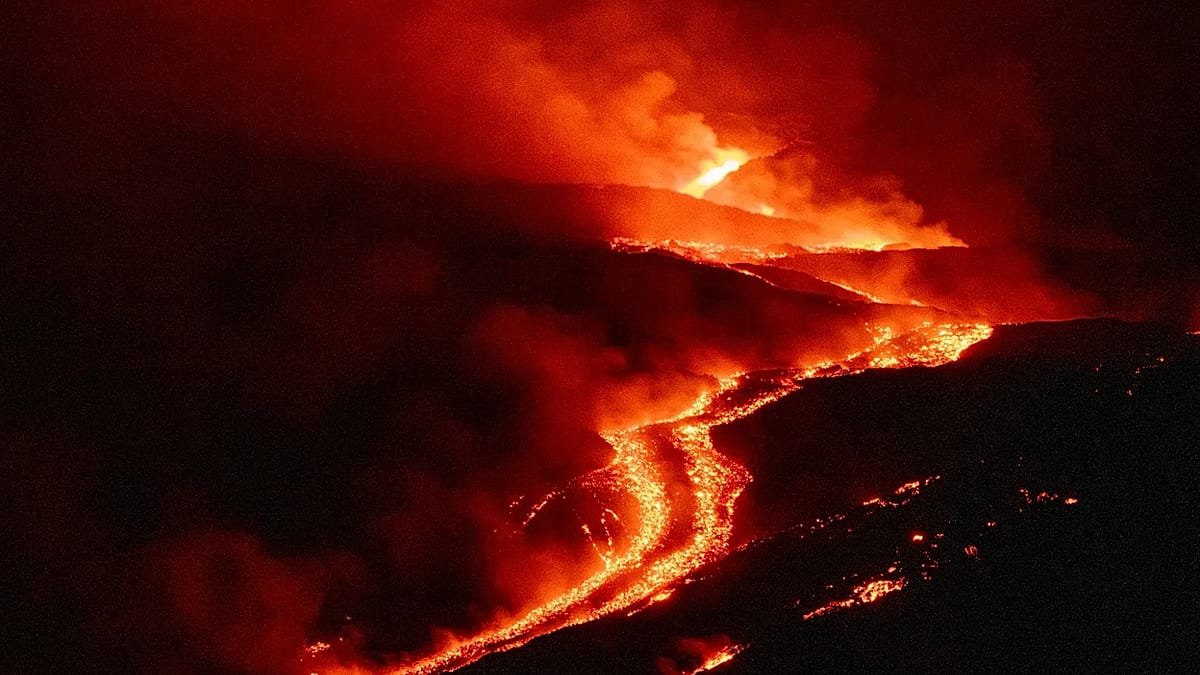
Mount Etna’s relentless eruption, now in its sixth consecutive day, has plunged Sicily’s summer air travel into disarray. Catania–Fontanarossa Airport was forced to suspend all arrivals and departures until 6 pm on Wednesday. This left thousands of holidaymakers stranded, as 55 outbound flights were cancelled that day alone. It added to 388 departures already scrapped since the eruption began.
Dozens more flights were rerouted to regional hubs like Palermo, Trapani, and Comiso. Comiso airport itself briefly halted operations until 10 am on Wednesday due to volcanic ash, though services later resumed.
Beyond Italy, Etna, Europe’s most active volcano, also affected Malta. Ash clouds forced aircraft there to alter routes and even postponed local celebrations. For instance, the Socjeta Muzikali La Stella Levantina of Attard cancelled Tuesday’s Feast of Santa Marija fireworks, citing proximity to flight paths.
The Volcanic Ash Advisory Centre in Toulouse confirmed the ash cloud’s southward and southwestward drift. A bulletin on Tuesday evening reported the highest ash concentrations over Sicily, with lower levels detected between eastern Malta and as far as northern Libya.
These repeated shutdowns have reignited a fierce political and infrastructure debate. Nello Musumeci, the Minister for Civil Protection and Maritime Policies, weighed in, stating the disruption ‘brings back to the fore a problem that Sicily has known about for a long time.’ Musumeci highlighted his own ignored warnings from decades past.
He recalled that ‘as far back as 1999, as president of the Province of Catania, I had pointed out the limitations of the Fontanarossa airport.’ Musumeci noted its ‘particular vulnerability linked to its proximity to Etna.’ He had then proposed relocating the airport within the provincial spatial plan, commissioning a preliminary study. The vision placed a new hub on the plain between Catania and Enna, designed to serve seven of the island’s nine provinces.
‘That idea of mine did not receive any backing,’ Musumeci added. He explained that his subsequent efforts as regional president also met ‘opposition from the airport operator and indifference from local authorities.’
The minister’s stark conclusion resonates powerfully today: ‘The events of recent days show just one thing: it is not the volcano that is in the wrong place, but the airport.’ As Etna continues its fiery display, the true challenge for Sicily lies not in taming nature. It is in finally confronting a long-standing political inertia over crucial infrastructure.